


Performance Anxiety: Why It Happens and How Therapy Can Help

Jenna Hendricksen, LMFT
July 20, 2026

You prepared. You know your material. You’ve done this before.

Yet the moment all eyes are on you, your heart starts racing. Your mind goes blank. You second guess every word, every decision, and every movement.

If this sounds familiar, you’re not alone.

Performance anxiety affects people across every profession and stage of life, from executives presenting to senior leadership, athletes competing at elite levels, and performers stepping onto a stage, to students taking important exams or professionals interviewing for a new opportunity. The more important the moment feels, the more likely anxiety is to show up.

What Is Performance Anxiety?

Performance anxiety is the intense emotional and physical stress that occurs when you feel your abilities are being evaluated. While it is normal to experience some nervousness before a high pressure event, performance anxiety goes beyond typical butterflies. It can interfere with your ability to think clearly, stay present, and perform at the level you know you are capable of.

One of the biggest misconceptions about performance anxiety is that it means you are not prepared. In reality, many people experiencing performance anxiety are exceptionally prepared. They have studied, practiced, rehearsed, and done everything they can to set themselves up for success.

The problem is not a lack of knowledge or ability. It is what anxiety does to the brain and body.

When your nervous system perceives a high pressure situation as a threat, it activates the fight, flight, or freeze response. Blood flow and energy are redirected toward survival rather than higher level thinking. As a result, it can suddenly feel like your mind has gone blank, you cannot find the right words, or you cannot access information you know you have mastered. The knowledge has not disappeared. Your brain is simply prioritizing survival over performance.

This is why someone can deliver a flawless presentation in practice, ace every mock interview, or perform perfectly in rehearsal, only to struggle when it matters most. The preparation is there. The anxiety simply makes it temporarily inaccessible.

Common symptoms include:

  • Racing thoughts or excessive self-monitoring
  • Difficulty concentrating or finding the right words
  • A racing heart, shaking, muscle tension, or nausea
  • Feeling as though your mind has suddenly gone blank
  • Fear of making mistakes or being negatively evaluated

Why Does Performance Anxiety Affect Some People More Than Others?

Many people assume performance anxiety is simply about lacking confidence, but that is rarely the full story.

More often, performance anxiety develops because your brain has learned to associate being evaluated with danger. Maybe you were harshly criticized after making a mistake. Perhaps you froze during an important presentation years ago, experienced an embarrassing moment in a competition, or grew up in an environment where perfection was expected.

Even if those experiences happened years ago, your nervous system can continue to respond as though the threat is happening again. When you find yourself in a similar high pressure situation, your brain automatically activates its stress response, making it difficult to think clearly, remember information, or trust yourself.

That is why positive thinking alone is often not enough. You may logically know you are capable, but your nervous system has not received that same message.

How I Treat Performance Anxiety

My approach combines Cognitive Behavioral Therapy (CBT) and Eye Movement Desensitization and Reprocessing (EMDR) therapy to address both the thoughts and the nervous system responses that keep performance anxiety going.

Cognitive Behavioral Therapy (CBT)

CBT helps identify the thinking patterns that fuel anxiety before and during high pressure situations.

Together, we work to recognize and challenge beliefs such as:

Together, we work to recognize and challenge beliefs such as:

  • “If I make one mistake, everyone will notice.”
  • “I have to be perfect.”
  • “If I get anxious, I will fail.”
  • “Everyone is judging me.”

Instead of allowing these automatic thoughts to take over, you will learn practical strategies to respond with more balanced, realistic thinking. CBT also teaches techniques to improve focus, reduce overthinking, and shift your attention back to the task instead of your anxiety.

The goal is not to convince yourself you will never feel nervous. The goal is to help anxiety stop controlling your performance.

EMDR Therapy

While CBT addresses the present, EMDR helps resolve the experiences that often created the anxiety in the first place.

Using bilateral stimulation, EMDR allows your brain to fully process memories that remain emotionally stuck, such as moments of embarrassment, criticism, panic, or perceived failure. As these memories are processed, they lose the emotional intensity that has been triggering anxiety in current situations.

EMDR is also incredibly effective for future performance. We can target upcoming presentations, interviews, competitions, auditions, or performances before they happen, helping your brain rehearse these situations with greater confidence, calmness, and control. This reduces anticipatory anxiety and allows you to enter important moments feeling more prepared, not just mentally, but physiologically.

Calming the Nervous System

Performance anxiety is not only a thinking problem. It is a nervous system response.

Throughout therapy, you will also learn techniques that help regulate your body’s stress response so you can remain grounded under pressure. Through bilateral stimulation and other evidence based regulation skills, your nervous system learns that these situations are no longer dangerous. As your body begins to feel safe, your brain is better able to access the knowledge, preparation, and experience you already have.

You Do Not Have to Keep White Knuckling Important Moments

Performance anxiety can make even the most accomplished people question themselves. But it does not have to dictate how you show up in the moments that matter most.

When we address both the thoughts driving anxiety and the underlying experiences stored in the nervous system, lasting change becomes possible. Instead of simply managing anxiety, therapy helps you build genuine confidence, trust your abilities, and perform with greater clarity, presence, and ease.

Couple touching foreheads and holding hands on a couch, symbolizing connection in premarital therapy
By Jenna Hendricksen, LMFT January 24, 2026
Discover how premarital therapy is a proactive investment in your relationship, helping build a strong foundation and effective communication skills.

A woman experiencing burnout, sitting with her hand pressed to her head in exhaustion.
By Jenna Hendricksen, LMFT October 22, 2025
Feel depleted? Burnout is more than stress. Learn the common signs, the causes, and how to set boundaries to start healing. Find your path back to balance.

Grieving person covering his face with his hands learning how to cope with loss.
By Jenna Hendricksen, LMFT August 5, 2025
Discover how to support someone who is grieving. Learn what to say, what to avoid, and how to offer lasting comfort from a licensed therapist.

Gold wedding rings on text reading “Love is patient, love is kind,” symbolizing lasting love.
By Jenna Hendricksen, LMFT July 8, 2025
Discover 3 simple weekly habits, dates, check-ins, and self-care, that help couples stay connected, deepen intimacy, and strengthen their marriage over time.
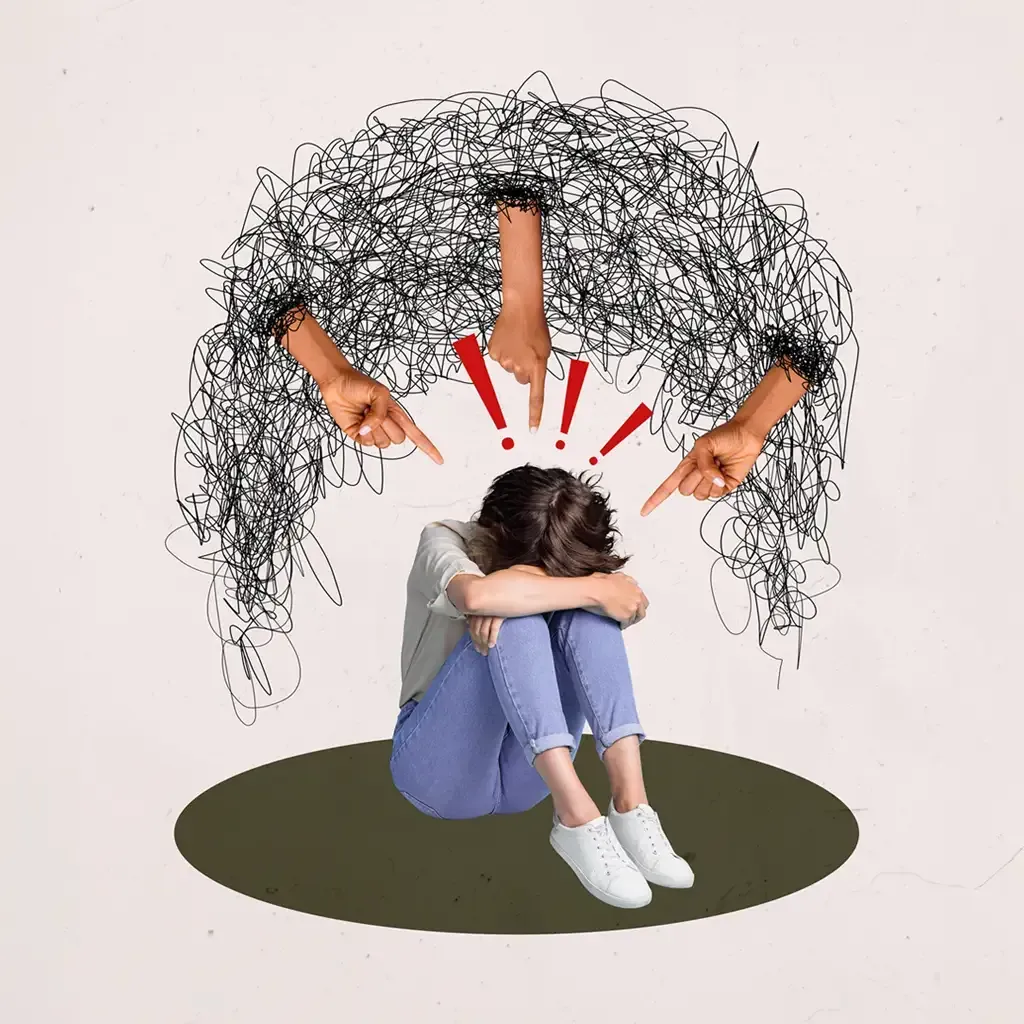
Woman overwhelmed by judgmental thoughts, symbolized by pointing hands and scribbles—representing ne
By Jenna Hendricksen, LMFT July 3, 2025
Discover how harsh inner dialogue damages your mindset, fuels anxiety, and blocks personal growth, and learn practical ways to replace it with self-compassion.

Couple touching foreheads and holding hands on a couch, symbolizing connection in premarital therapy
By Jenna Hendricksen, LMFT January 24, 2026
Discover how premarital therapy is a proactive investment in your relationship, helping build a strong foundation and effective communication skills.
A woman experiencing burnout, sitting with her hand pressed to her head in exhaustion.
By Jenna Hendricksen, LMFT October 22, 2025
Feel depleted? Burnout is more than stress. Learn the common signs, the causes, and how to set boundaries to start healing. Find your path back to balance.
Grieving person covering his face with his hands learning how to cope with loss.
By Jenna Hendricksen, LMFT August 5, 2025
Discover how to support someone who is grieving. Learn what to say, what to avoid, and how to offer lasting comfort from a licensed therapist.
Gold wedding rings on text reading “Love is patient, love is kind,” symbolizing lasting love.
By Jenna Hendricksen, LMFT July 8, 2025
Discover 3 simple weekly habits, dates, check-ins, and self-care, that help couples stay connected, deepen intimacy, and strengthen their marriage over time.
Woman overwhelmed by judgmental thoughts, symbolized by pointing hands and scribbles—representing ne
By Jenna Hendricksen, LMFT July 3, 2025
Discover how harsh inner dialogue damages your mindset, fuels anxiety, and blocks personal growth, and learn practical ways to replace it with self-compassion.